The UK’s road infrastructure is facing critical challenges that affect daily commuters and the logistics industry alike. A staggering 89% of all freight in the UK is transported by road, according to the Road Haulage Association (RHA). This underlines the essential role those well-maintained roads play in our economy and daily lives.
Unfortunately, the reality today is a far cry from what’s needed. Crumbling surfaces, potholes, and congestion are making UK roads less safe. In this article, we’ll examine the state of UK roads, the government’s plans to address the issues, and why choosing a logistics partner who understands these challenges is more important than ever.
Source: The Road Haulage Association (RHA)
Why UK roads are no longer safe
The UK has long been known for its road safety, but recent data points to a worrying decline. Crumbling road surfaces, persistent potholes, and increasing congestion are leading to more accidents, vehicle damage, and costly delays.
For the logistics industry, these issues are more than a minor inconvenience, they can be costly and dangerous. A safe, reliable transport network is vital for smooth operations, and right now, the state of our roads is far from ideal.
At Fagan & Whalley, we understand that effective logistics depend on safe, well-maintained infrastructure. But with the current state of UK roads, it’s clear that significant changes are urgently needed. Let’s take a closer look at what’s going wrong.

The pothole issue
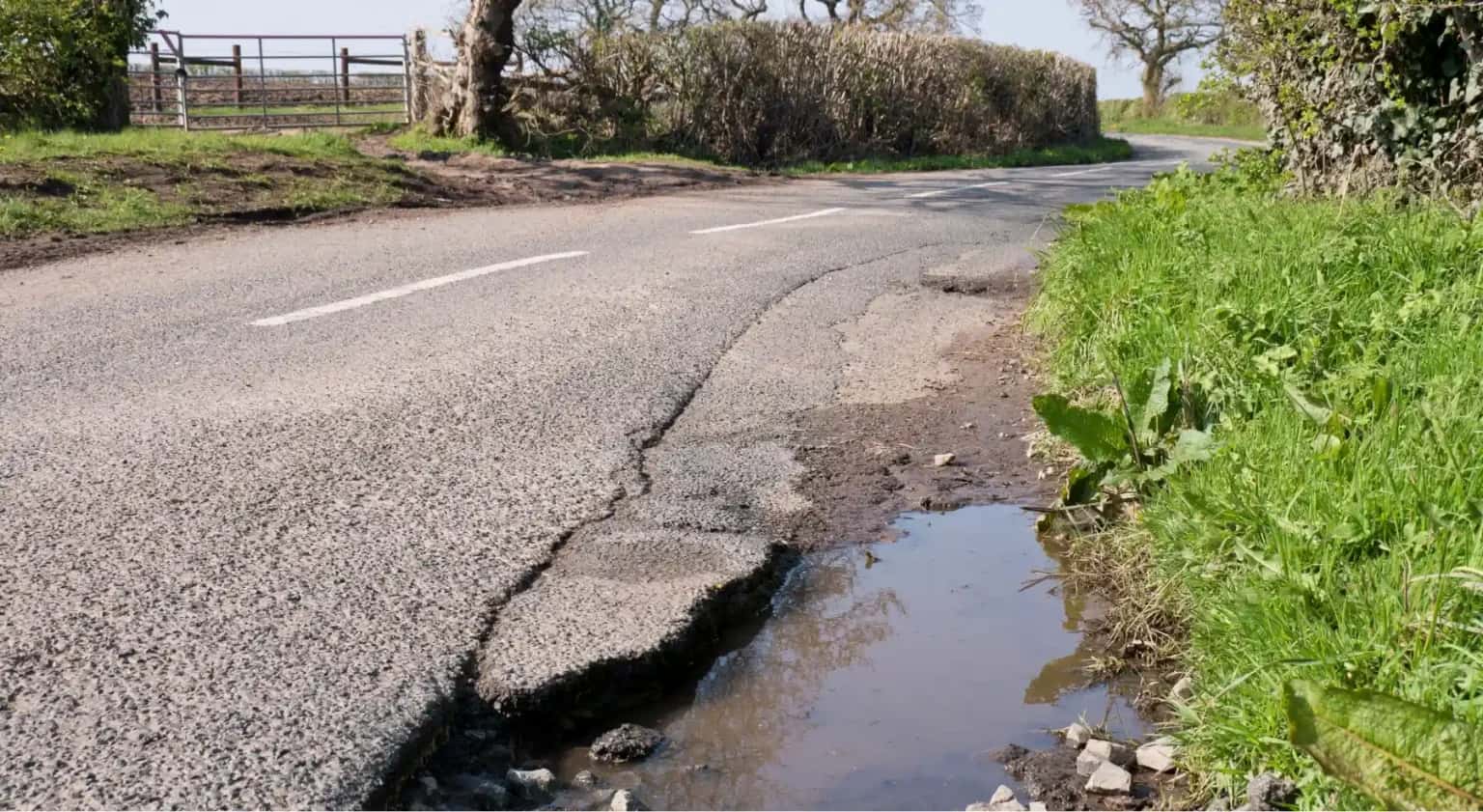
Potholes are everywhere, and they’re only getting worse. Because our damp climate constantly exposes roads to moisture, we are currently dealing with approximately one million potholes across the UK. When rainwater seeps in and freezes, it expands, cracking the surface. Over time, these cracks widen, creating potholes.
Weather isn’t the only factor, however. The materials used in road construction and maintenance play a huge role in durability. Without strong foundations, our roads will continue to break down, leading to costly and recurring repairs.
What about road congestion?
Road congestion is another issue contributing towards the state of our roads. The UK’s cold and rainy climate has contributed to a high vehicle ownership rate, with over 40 million vehicles on the road as of 2023, up from 25 million in the 1980s.
This increase of vehicles per household, coupled with 89% of all freight being transported by road, leads to severe congestion during peak times. Congestion increases the risk of accidents and forces drivers onto alternative routes that aren’t built to handle HGVs, creating hazards for both motorists and pedestrians.

The impact on the logistic industry
The condition of UK roads significantly affects the logistics industry, where timely deliveries are crucial. Poor road conditions lead to delays, increasing pressure on drivers and operations managers. While some blame road deterioration to HGVs, the real issue is weak infrastructure and poor maintenance.
In 2023, a Lancashire resident reported significant cracks in his home due to HGVs and buses repeatedly hitting potholes on a neglected road. This is just one example of how failing infrastructure impacts both communities and logistics.
Such incidents aren’t isolated. Across the UK, businesses, drivers, and residents face the consequences of underfunded roads. Addressing these issues is vital for economic growth and efficient transport networks.
Good road infrastructure increases delivery efficiency
There’s a reason why good road infrastructure increases delivery efficiency. When roads are appropriately maintained, deliveries are faster, safer, and more reliable.
Fewer accidents mean fewer delays, reduced costs, and a more sustainable transport network. According to the RHA, improving roads could bring a £26 billion boost to the UK economy. That would be a massive return on investment that benefits businesses, workers, and consumers alike.
Sam Fagan, Managing Director at Fagan & Whalley, puts it simply:
“Our drivers are out on the roads every day, navigating potholes, diversions, and congestion just to get deliveries where they need to be. It shouldn’t be this hard. Our drivers deserve better, as does every citizen in the UK.
Improving road safety
So, what’s being done to improve road safety?
The answer isn’t straightforward. Improving infrastructure takes time, money, and long-term planning, and while patchwork efforts help in the short term, they rarely deliver lasting impact. However, there are efforts to drive progress:
Build new roads or repair what’s there?
Should we fix what we have or build new roads? Many argue that building new roads reduces congestion and supports growth, yet it’s costly, time-consuming, and impacts the environment. In many cases, repairing is faster and cheaper, improving road conditions without causing significant disruption.
Both solutions are valid, but investment must be strategic. The focus should be on long-term improvements, not quick fixes. Thinking ahead ensures that roads support growing transport demands while keeping businesses and drivers moving efficiently and safely.
The government’s efforts to improve roads
The UK government has promised £1.6 billion to fix potholes, but money alone won’t solve the problem. Councils must demonstrate effective use of these funds or risk losing up to £125 million in funding. This initiative emphasises accountability and aims to ensure timely and efficient road repairs. Too often, temporary fixes are used instead of long-term solutions, leading to repeated issues and wasted taxpayer money.
As we mentioned before, without a clear long-term infrastructure plan, drivers will continue to face the same frustrating challenges.
The importance of advocating for better roads
Advocating for better roads is essential to ensure safe and efficient transportation. At Fagan & Whalley, we want to sum this article by mentioning the little but effective changes that can transform our roads:
- Better maintenance – Prioritising repairs over short-term patchwork fixes.
- Innovative infrastructure – Using better materials that withstand the UK climate. Such as weather-resistant materials to make roads last longer.
- Strategic expansion – Building new roads where congestion is highest. For example, adding extra lanes on busy motorways and building bypasses around congested towns.
Choosing a partner committed to infrastructure advocacy and innovation can make all the difference in achieving seamless and reliable logistics operations.
Choosing a logistic partner that cares
Better roads benefit everyone, but for logistics, advocating for this change could be a game-changer. Our goal is to contribute towards a stronger industry that offers faster deliveries, safer conditions, and reduced costs.
At Fagan & Whalley, we aim to move industries forward. Partnering with us means working and innovating for a better future.
If your business relies on transport, it’s time to choose a partner who cares. Enquire now or contact us at 01282 771983